

By TN Ashok. New Delhi
August 17, 2026
youtube.com/@theflagpost
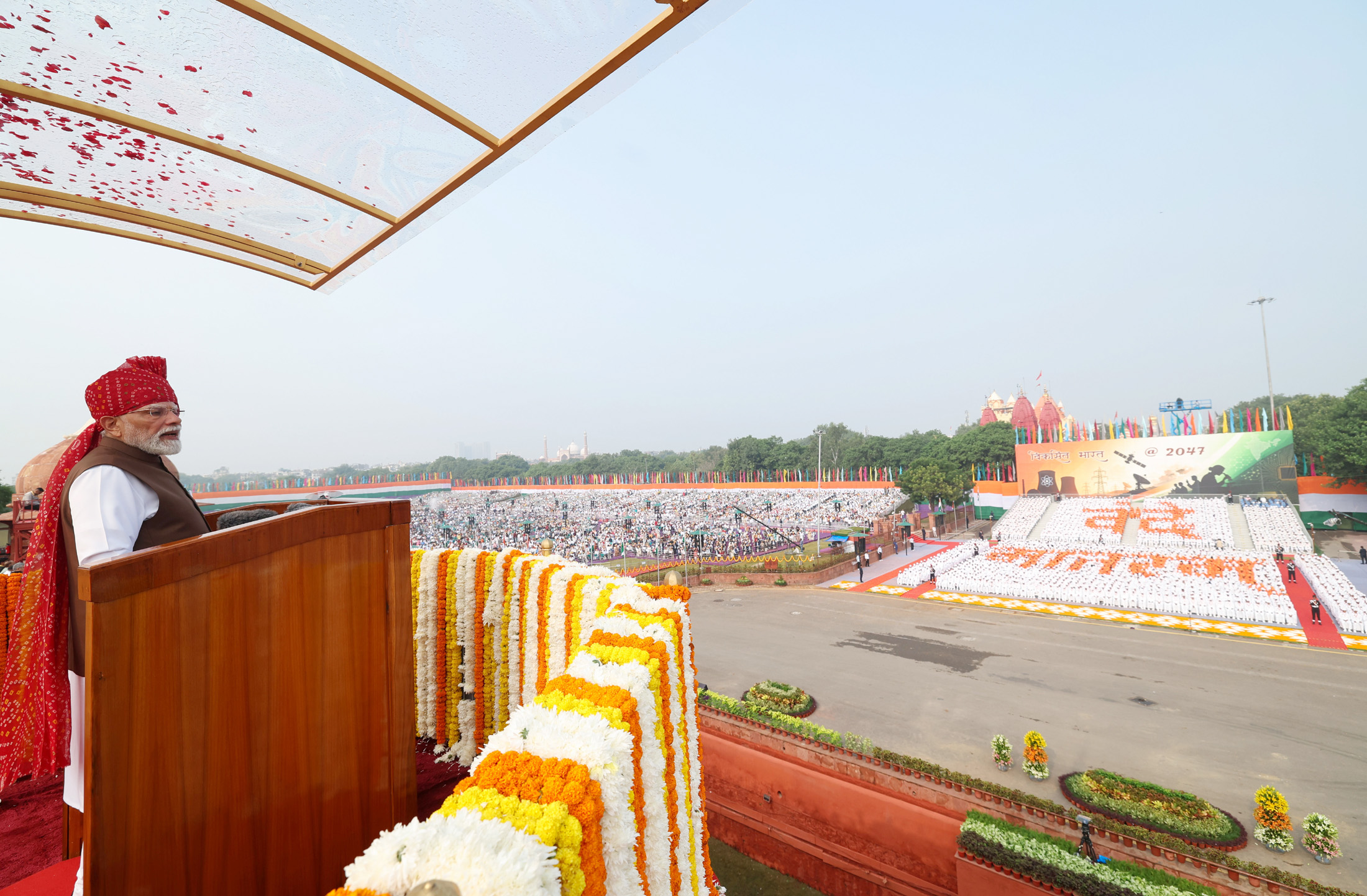
India’s 80th Independence Day was meant to be a celebration of national unity. Instead, it became a revealing moment in the country’s political evolution: the ruling establishment and the Opposition are increasingly competing for the allegiance of a young, restless and politically unpredictable generation.
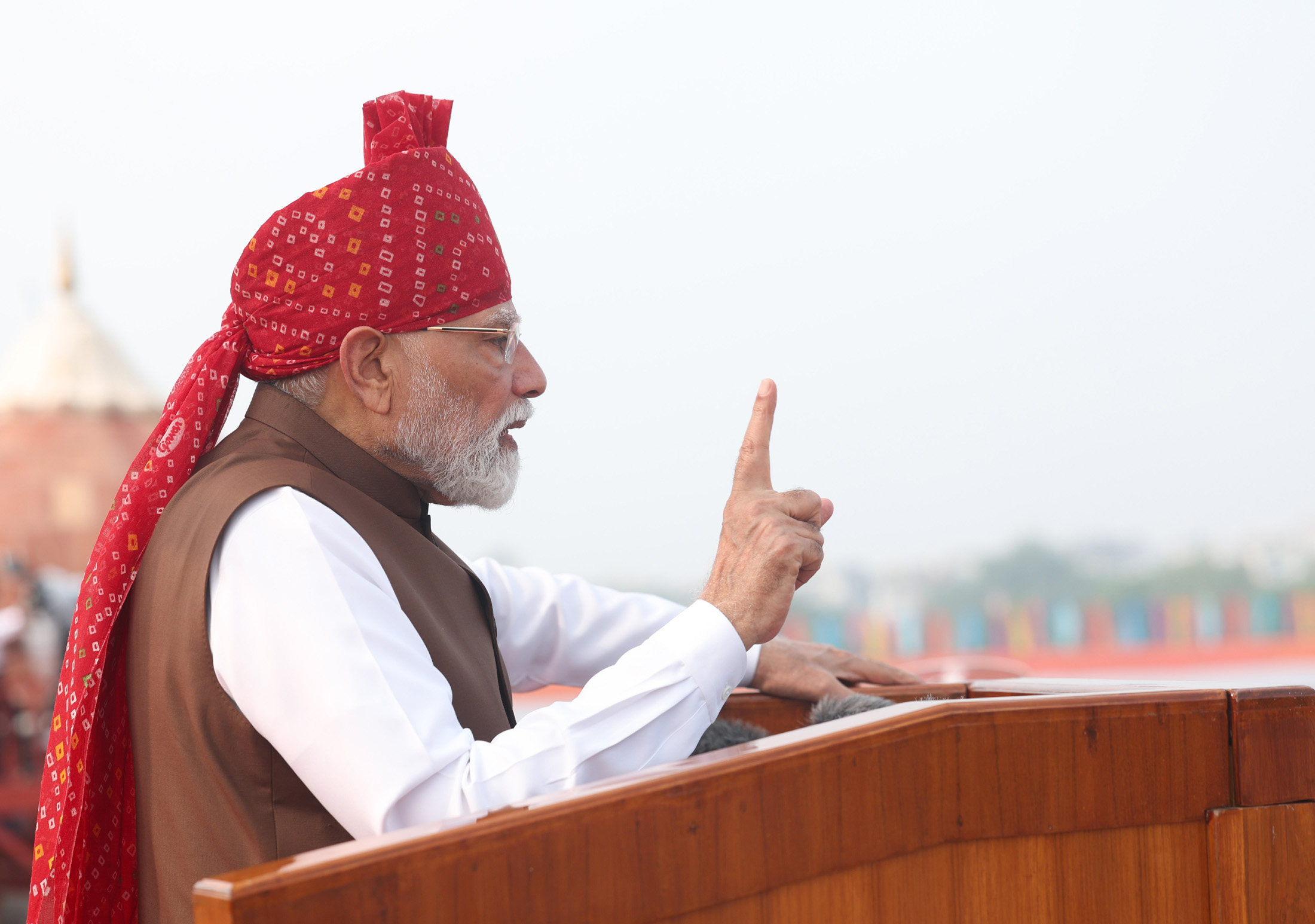
From the ramparts of the Red Fort, Prime Minister Narendra Modi sought to speak directly to Gen Z, promising free coaching for competitive examinations, a one-crore-strong AI-skilling programme and greater emphasis on jobs, entrepreneurship and opportunity. The message was unmistakable. India’s youth is no longer a demographic statistic; it is becoming the decisive political constituency of the next decade. The timing was hardly accidental.
The 36-day student agitation over examination irregularities and the NEET paper-leak controversy had shaken the BJP-led government in a way few Opposition protests have managed in recent years. The resignation of Education Minister Dharmendra Pradhan became the clearest symbol of the government’s vulnerability. It demonstrated that a generation often assumed to be broadly sympathetic to the BJP could mobilise independently, force accountability and put political power under pressure.The political establishment took note.
Modi’s warning against “dimagi Naxals” — echoing the BJP’s earlier use of the term “urban Naxals” to describe sections of dissenting intellectuals and activists — appeared to carry a second message: youth anger should not cross the line into what the government considers politically subversive territory. But the very fact that the Prime Minister was addressing this constituency so directly suggested that the old political equations are changing.
The BJP remains India’s dominant political force, but its electoral trajectory has altered. Its Lok Sabha tally fell from 303 seats in 2019 to 240 in 2024, leaving it dependent on coalition partners. The nationalist wave that followed the Balakot and Uri episodes could not be reproduced in the same form. National security and nationalism remain powerful political instruments, but they are increasingly being supplemented by bread-and-butter concerns — examinations, employment, skills, wages and economic mobility.
President Droupadi Murmu’s Independence Day message struck a notably different tone. Her emphasis on aspiration and the ambitions of young Indians placed the focus less on ideological confrontation and more on opportunity. It also offered the Opposition an opening.
The Congress party has attempted to occupy that space through Rahul Gandhi’s “Chhatron Ki Goonj” campaign, linking examination irregularities with the larger problem of unemployment and insecurity among young Indians. Mallikarjun Kharge has sought to connect the right to dissent with India’s freedom struggle and constitutional values.
The Opposition’s argument is simple: young people questioning the government are not necessarily anti-national; they are exercising democracy. That proposition could become politically potent.
The first test will come in the 2027 Assembly elections, particularly in Uttar Pradesh and Punjab, before the battle for the Lok Sabha in 2029. Uttar Pradesh remains the great electoral prize, while Punjab offers a different political laboratory where youth aspirations, unemployment, farm concerns and anti-establishment sentiment can intersect.
For the BJP, the larger challenge is that Gen Z is not easily owned by any political party. It is less ideological, more transactional and intensely connected through social media. It wants fair examinations, jobs, dignity and mobility. The Cockroach Janata Party movement, which emerged from the student protests but resisted being converted into a conventional electoral vehicle, illustrated precisely this phenomenon: young Indians can influence politics without necessarily joining a political party. That makes them both attractive and dangerous to established political formations. By 2029, the size of India’s young electorate could make Gen Z and younger millennials an extraordinary electoral force. The party that understands their aspirations without appearing to manipulate them could gain a decisive advantage.
There is an interesting parallel in the United States, where President Donald Trump’s Republican Party is also confronting signs of youth and anti-establishment discontent. Democrats have recorded a string of strong performances in special elections and state level contests, raising hopes of recovering the House in the November midterms. Younger Democratic figures such as Zohran Mamdani and Alexandria Ocasio-Cortez have become symbols of a more assertive generational politics, while Republicans are debating the future between figures such as Vice President JD Vance and Secretary of State Marco Rubio.
Europe is experiencing a similar fragmentation. France’s political centre has weakened, Germany’s governing coalition faces pressure from the far right and voters across the continent are increasingly questioning established political parties. The common thread is not that young voters everywhere are moving to the left or right. It is that they are becoming less deferential to incumbents. That distinction matters in India. For years, the BJP successfully presented itself as the party of aspiration, technology, nationalism and a rising India. Gen Z was naturally part of that narrative. But aspiration carries a political risk: once young people expect opportunity, they become impatient when institutions fail to deliver it.
An examination paper leak therefore becomes more than an administrative failure. It becomes a question of fairness. A shortage of jobs becomes more than an economic statistic. It becomes a question of dignity. A delayed recruitment examination becomes a political grievance. This is where the Opposition sees its opportunity.
But Congress and other opposition parties should not assume that anger automatically translates into votes. Young Indians may be hostile to the government on one issue and still support it on another. They may reject traditional party politics altogether. Their allegiance can shift rapidly, driven by jobs, education, inflation, social media narratives and individual aspirations.
For the BJP, therefore, the challenge is not simply to win back protesting students. It is to reclaim its earlier position as the political vehicle of youthful aspiration. For the Opposition, the challenge is equally formidable: it must demonstrate that it can convert protest into policy rather than merely convert anger into votes.
The Red Fort still belongs to the Prime Minister. But the political conversation emerging from the streets, campuses and social-media networks increasingly belongs to a generation that does not automatically defer to anyone. That may be the real significance of India’s 80th Independence Day. The next great political contest will not simply be between BJP and Congress, nationalism and secularism, or government and Opposition. It will be a contest over who can understand — and ultimately earn the trust of — India’s restless young.
From Delhi to Washington and Paris, the message of 2026 is becoming increasingly clear: incumbency is no longer an asset in itself. A generation that once wanted to inherit the future now wants to shape it.
